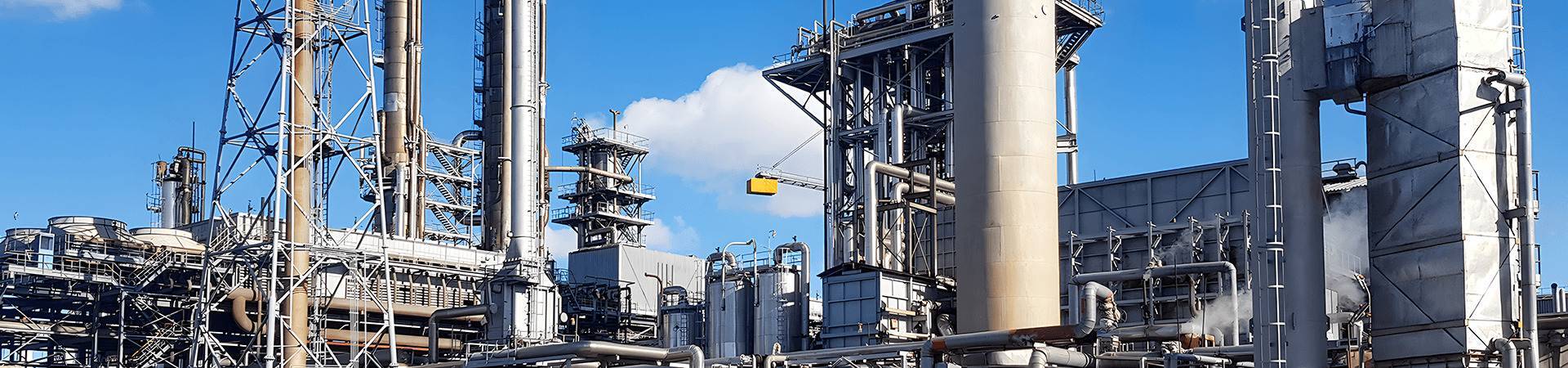
ExxonMobil Integrated Petrochemical Supply Chain Guarantees Steady IPA Delivery Worldwide
Supply continuity for isopropanol is determined less by terminal storage than by the C₃ feedstock balance, hydrogen availability, and the ability of an integrated petrochemical complex to redirect propylene derivatives without interrupting downstream unit operation. In the ExxonMobil integrated supply configuration, chemical-grade propylene from refinery C₃ splitters is routed to direct hydration where water and propylene react over an acidic catalyst at 180–260 °C and 2–6 MPa. Single-pass conversion is deliberately held below 20 % to manage selectivity, and unconverted propylene is recovered in a high-pressure recycle loop. The crude IPA stream is then dehydrated through azeotropic distillation to break the minimum-boiling azeotrope at approximately 87.9 wt% IPA and 80.4 °C at 101.3 kPa. Because the production asset is co-located with steam cracking and catalytic reforming, hydrogen for acetone hydrogenation and utility steam for distillation are supplied without merchant-market exposure. This upstream integration allows product-release testing to proceed under a single quality-control data architecture, reducing lot-to-lot variability in water content, acidity, and non-volatile residue.
Product stewardship and transport classification are fixed: IPA is UN 1219, Class 3, Packing Group II, with a flash point of approximately 12 °C and autoignition temperature near 399 °C. REACH registration under EC number 200-661-7 and CAS 67-63-0 provides the EU regulatory basis. Vessels, shore tanks, and ISO containers are constructed of 316L stainless steel or lined carbon steel and are nitrogen padded to limit oxygen ingress below 2 % by volume. Loading is performed with closed-loop vapour recovery; in-transit temperature logging is specified for shipments crossing marine environments where daily thermal cycling may raise headspace partial pressure. These physical-distribution controls are as important as production chemistry because IPA can form trace organic peroxides when stored in the presence of dissolved oxygen and light.
Supply-chain risk for IPA is concentrated at four points: propylene availability during refinery turnarounds, distillation tower reboiler fouling, drum availability during peak season, and static discharge during loading. The integrated C₃ complex addresses propylene availability by drawing from both fluid catalytic cracker off-gas and steam cracker propylene; dual feedstocks reduce the probability of a simultaneous feedstock outage below site HAZOP target values. Reboiler fouling is managed with polymer inhibitor dosing and periodic hot-water washing; the distillation train is specified with spare reboiler capacity of 20 % above design duty. Drum availability is addressed through multi-region packaging lines and a drum-washing operation that restores returnable 200 L stainless steel containers to low-residue condition. Static discharge is controlled by limiting loading velocity to 1 m/s for non-conductive liquids and by using in-line relaxation chambers before entering the storage tank; this is standard engineering practice under IEC 60079-32.
What Limits Semiconductor-Grade IPA Specification Compliance at Sub-10 nm Nodes?
The surface tension of anhydrous IPA at 20 °C is approximately 21.7 mN/m, compared with 72.8 mN/m for ultrapure water, and this difference is exploited in Marangoni-style wafer drying tools. In single-wafer cleaning equipment, a thin aqueous film is displaced by a controlled IPA vapour plume delivered through a nozzle at wafer temperatures between 70 and 90 °C. If the IPA feed contains dissolved cations above the acceptance limit, non-volatile residues remain on the post-dry surface and can shift the threshold voltage of gate dielectric structures. Process qualification therefore includes total cation analysis by ICP-MS after sample preconcentration, particle counting with laser diode sensors at 0.1 µm and 0.5 µm thresholds, and Karl Fischer water determination per ASTM E203. For sub-10 nm logic nodes, the ratio of pattern height to line spacing produces capillary pressures exceeding 10 MPa during aqueous rinse; IPA vapour drying reduces the liquid-vapour surface tension and therefore reduces collapse force. Fabs commonly require packaging in 200 L electropolished stainless steel drums or dedicated ISO tanks with 0.1 µm PTFE filters on dispense lines because the cleanliness of the container closure can dominate the final particle count.
Integration of the supply chain matters for semiconductor applications because product that meets specification at the plant gate can be degraded by repetitive drum-to-line transfer. Production lots are released from dedicated electronic-grade storage that is segregated from industrial solvent lines; the tank venting system uses HEPA filters with 99.97 % retention at 0.3 µm. To maintain lot traceability, automated fill lines record lot number, drum tare mass, net mass, and fill date. Published clause-level limits for the highest-purity SEMI C41 grades are generally established under customer-specific quality agreements; however, it is known that metal impurities are controlled below 1 µg/kg for critical elements, and anion concentrations are verified by ion chromatography with suppressed conductivity detection. The operational boundary is clear: once a drum is opened inside a fab sub-fab area, it should be flushed with nitrogen and consumed within a site-defined holding time to prevent atmospheric moisture and carbon dioxide absorption; published data for absorption kinetics in open sub-fab environments is limited.
| Property | Method | Semiconductor | Pharmaceutical | Industrial |
|---|---|---|---|---|
| Water mass fraction | ASTM E203 | ≤ 0.02 wt% | ≤ 0.2 wt% | ≤ 0.5 wt% |
| Non-volatile residue | ASTM D1353 | ≤ 5 mg/L | ≤ 50 mg/L | ≤ 100 mg/L |
| Acidity as acetic acid | ASTM D1613 | ≤ 0.005 wt% | ≤ 0.01 wt% | ≤ 0.02 wt% |
| Colour, Pt-Co | ASTM D1209 | ≤ 5 | ≤ 10 | ≤ 15 |
| Particle count ≥ 0.5 µm | laser particle counter | ≤ 25 particles/mL | not specified | not specified |
The antimicrobial activity of IPA in aqueous solution is not linear with concentration; the maximum practical bactericidal activity is observed at 60–80 % v/v, with 70 % v/v used most frequently because water slows evaporation and allows penetration through cell-wall porins. In cleanroom disinfection programs, aqueous IPA is validated against EN 13727 for bactericidal activity, EN 13624 for yeasticidal activity, and EN 14476 for enveloped-virucidal activity using a 60–120 s contact time under low soiling conditions. Applied to stainless steel isolators, transfer hatches, and glove ports via sterile nonwoven wipes, IPA reduces bioburden but does not claim sporicidal action; spore-forming organisms such as Clostridium difficile require separate treatment with 6 % hydrogen peroxide or sporicidal peracetic acid instead. The manufacturing and release of the IPA component are governed by FDA 21 CFR 211 when supplied as a pharmaceutical excipient and by ISO 9001:2015 for industrial biocide-formulation use. The operational boundary is that mixing with sodium hypochlorite, quaternary ammonium compounds, or strong oxidizers is incompatible and can generate chlorinated organics or heat; therefore, surface rotation requires an aqueous rinse between agents.
Pharmaceutical Solvent Dehydration and Peroxide Control in Integrated Supply Chains
Residual-solvent limits for isopropanol are established in ICH Q3C as a Class 3 solvent with a permitted daily exposure of 50 mg/day; this classification reflects a low toxicological concern and allows standard pharmaceutical processing without the heavy-metal restrictions applied to Class 1 solvents. The pharmacopoeial monograph requires identification by infrared spectroscopy, assay by gas chromatography not less than 99.0 %, water by Karl Fischer, and non-volatile residue not more than 0.005 %. In a production-scale integrated chain, the same distillation tower can produce USP/NF-grade material by increasing distillate reflux ratio and switching from carbon steel to 316L stainless steel product coolers; this equipment change reduces iron carryover and the discolouration caused by trace aldehyde polymers. Product is stored under nitrogen in sealed stainless tanks, and transfer to ISO containers is completed through 1 µm cartridge filters to protect against particulate ingress from loading lines.
Peroxide formation is a threshold risk when pharmaceutical IPA is recovered in multi-day process campaigns or stored in partially filled containers. IPA absorbs atmospheric oxygen; light and trace iron catalyse autoxidation to acetone and hydrogen peroxide, and the peroxide level can rise above the pharmacopoeial control limit if the storage tank is not inerted. The integrated supply chain mitigates this by injecting nitrogen through a pressure-vacuum valve and by specifying storage tank turnover at least once per 30 days for non-bulk containers. In addition, pharmaceutical manufacturers frequently specify peroxide testing by iodometric titration before use in oxidation-sensitive active pharmaceutical ingredient syntheses because residual peroxides can consume stoichiometric reducing agents and raise impurity profiles. The operational boundary is explicit: recovered IPA from crystallization or washing operations should not be re-used in critical process steps unless batch-specific assay and peroxide tests are performed; published data on self-heating or runaway decomposition of pure IPA is limited because the solvent is thermally stable under ambient conditions in the absence of strong oxidizers.
The largest-volume non-solvent use of isopropanol is as an intermediate in ketone and ester synthesis. In a fixed-bed multi-tubular reactor charged with a copper-zinc oxide catalyst, gas-phase dehydrogenation at 300–350 °C and near-atmospheric pressure produces acetone with a single-pass conversion of approximately 85–95 % and selectivity above 95 %; the reaction is endothermic and requires hot oil circulation to maintain the reactor shell at 320–380 °C. Unreacted IPA is recovered in an acetone column and returned to the reactor feed. The same C₃ integration supports production of isopropyl acetate by reactive distillation with acetic acid, and methyl isobutyl ketone by aldol condensation of acetone. This derivative flexibility is a supply-chain stabilizer: when electronics demand for high-purity IPA rises in the fourth quarter, production planners can pull more material into purification and reduce feed to the non-solvent derivatives, provided that contractual derivative commitments are met. Published data for specific unit capacities is limited; however, the process chemistry is well documented in industrial literature.
Material compatibility data are governed by swelling and permeation measurements. Neoprene and butyl rubber exhibit high volumetric swell in IPA; EPDM and silicone show moderate mass uptake, while fluorocarbon elastomers and PTFE retain tensile properties within acceptable limits after 7-day immersion at 23 °C, based on ASTM D471 testing. Gasketed tank connections and pump seals are therefore restricted to PTFE, fluorocarbon, or 316L stainless steel to avoid leakage and product contamination. The same standard is used to qualify transfer hoses; flexible hoses with non-fluorinated liners are rejected because plasticizer migration into high-purity IPA increases non-volatile residue above the pharmaceutical or semiconductor limit.
When High-Purity IPA Replaces NMP in Precision Coating and Ink Formulations
Replacement of N-methyl-2-pyrrolidone with IPA in precision coatings is technically feasible only when the faster evaporation profile is matched to application viscosity recovery. IPA has a relative evaporation rate of approximately 1.5–2.0 relative to n-butyl acetate, whereas NMP is below 0.05; this difference causes a rapid increase in solids level in roll-to-roll slot-die coating, which alters coating weight. The formulation must be adjusted with a retarder such as methyl ethyl ketone or a low-molecular-weight ester, and the viscosity should be measured on a 2 Zahn cup or a rotational viscometer using ASTM D2196. Drying is performed in a multi-zone forced-air oven with zone temperatures between 60 and 110 °C; residual solvent in the printed film is quantified by headspace gas chromatography. The integrated supply chain provides low-water IPA with consistent water content below 0.1 wt%, preventing moisture-driven pigment flocculation in moisture-sensitive systems.
Solvency equivalence is assessed by Hansen solubility parameters. IPA has HSP coordinates of δD ≈ 15.8 MPa0.5, δP ≈ 6.1 MPa0.5, and δH ≈ 16.4 MPa0.5, while NMP is strongly dipolar and aprotic; direct substitution therefore fails for polyethersulfone and certain polyimide resins. Qualification tests use a drawdown bar and cross-hatch adhesion after drying per ISO 2409, because solvent retention near the substrate interface can lower the adhesive bond. The operational boundary is that IPA should not be blended with chlorinated solvents in applications involving aluminium substrates because trace chlorides can initiate pitting corrosion in the presence of condensed water.
Vapour-Degreasing Stability Is Dictated by Peroxide and Acidity Thresholds
Vapour degreasing operations impose a different set of constraints than cold wiping because the solvent is repeatedly evaporated and condensed in an open-top or enclosed degreaser. In an enclosed degreaser using IPA, the sump temperature is held at 80–82 °C, and the freeboard chiller operates at -5–5 °C to suppress emissions. Repeated thermal cycling accelerates autoxidation if oxygen is not excluded; acid and peroxide accumulation in the sump can reach corrosive levels and attack aluminium components. The control involves weekly acid acceptance of 0.01 wt% maximum as acetic acid and peroxide concentration below 50 µg/g by iodometric titration. The integrated supply chain supports vapour degreasing by supplying industrial-grade IPA with low acidity and consistent water content; however, stabilizer addition is kept minimal because high-boiling inhibitors can remain on metal surfaces after evaporation and interfere with subsequent conversion coating. Published data for specific stabilizer formulations is limited.
Global movement of IPA under integrated supply agreements requires compliance with the International Maritime Dangerous Goods Code and the European Agreement concerning the International Carriage of Dangerous Goods by Road. The United Nations transport classification for IPA is UN 1219, Class 3, Packing Group II; the flash point is approximately 12 °C closed cup, and the explosion limits are 2.0–12.7 % v/v in air at 20 °C. Shore tank operations require fixed-roof tanks with internal floating screens or nitrogen blanketing to keep the vapour space below the lower flammability limit; loading lines are equipped with conductivity sensors and flow-rate limiting devices to prevent static discharge. For pharmaceutical customers, each ISO tank container is dedicated to high-purity solvent service and is washed to 0.1 µS/cm rinse-water conductivity before return to service. The integrated logistics model allows alternative sourcing within the same quality system, so that a production interruption at one region does not force a customer to qualify a new supplier.
| Regulatory domain | Designation | IPA-specific control |
|---|---|---|
| Transport | UN 1219, Class 3, PG II | flash point 12 °C, closed cup |
| EU chemical control | REACH EC 200-661-7 | full registration, CAS 67-63-0 |
| Residual solvent | ICH Q3C Class 3 | 50 mg/day permitted daily exposure |
| Pharmacopoeial monograph | USP/NF | assay, water, non-volatile residue |
| Disinfection validation | EN 13727, EN 13624, EN 14476 | 60–120 s contact time |
| Semiconductor | SEMI C41 | metal and particle controls |
| Quality system | ISO 9001:2015 | change control, lot traceability |
| Environmental management | ISO 14001:2015 | emissions and waste controls |
Formulation of high-solids alkyd coatings with IPA as a letdown solvent is constrained by the hydrogen-bonding capacity of the solvent and its effect on resin viscosity. At 25 °C, the addition of IPA at 5–15 wt% to a soya alkyd resin solution lowers the Gardner bubble viscosity from Z4 to Z1, requiring reformulation with a polar cosolvent to restore sag resistance. The measurement is performed with a bubble viscometer per ASTM D1545. High-throughput drum filling and supply-chain traceability provide the batch-to-batch consistency needed for this addition level; without adequate C₃ integration, water uptake in southern-hemisphere marine shipments can shift the letdown viscosity by more than 5 %. The operational boundary for alkyd formulators is that IPA at levels above 20 wt% can delay through-cure in cobalt-drier systems; the resin supplier should be consulted for drier balance adjustment.


